
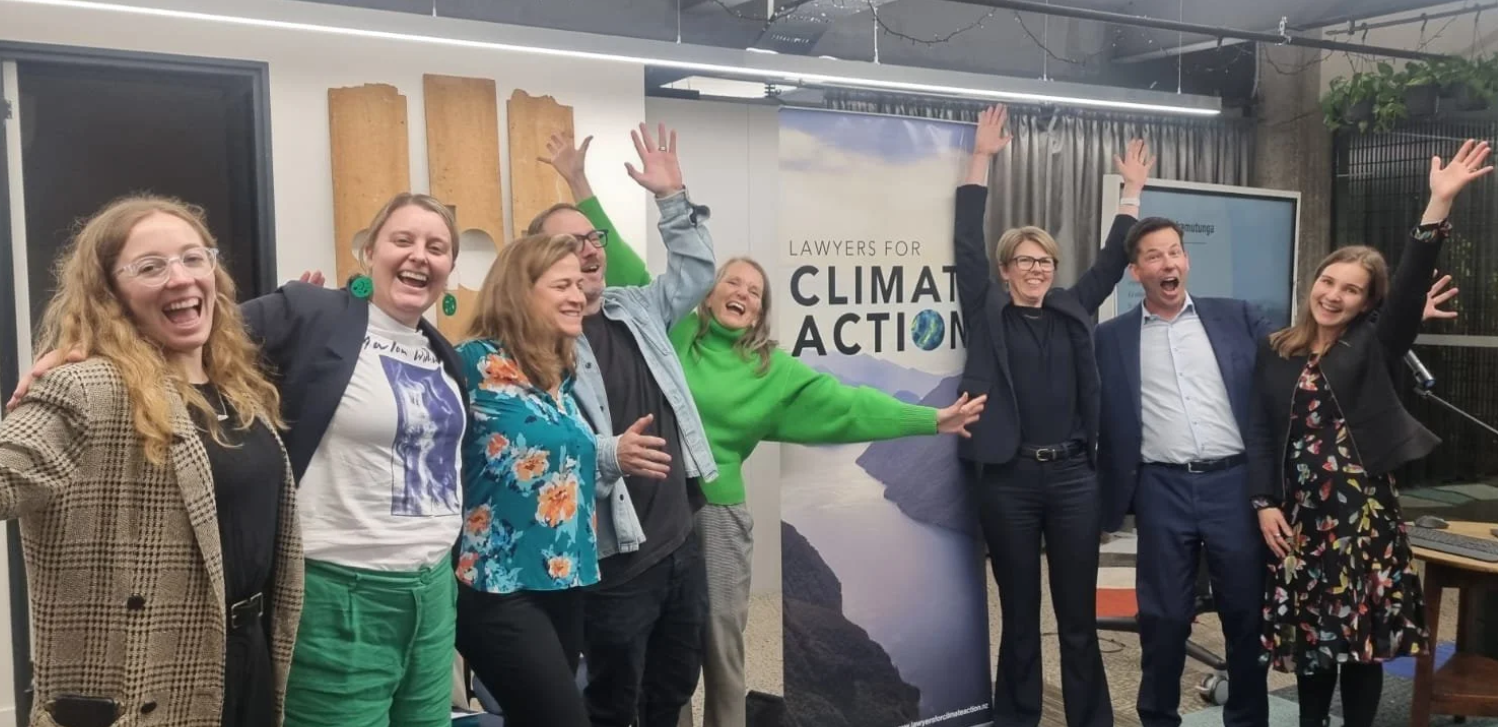
In November 2023, three small nonprofit organisations walked into the High Court with a big claim. Z Energy, New Zealand's second-largest greenhouse gas emitter, was misleading the public. The fuel giant had spent months blanketing the country with billboards, TV ads, and social media posts claiming they were "in the business of getting out of the petrol business."
But the lawyers at Lawyers for Climate Action NZ, alongside Consumer NZ and the Environmental Law Initiative, had done their homework. They knew Z Energy wasn't planning to exit fossil fuels anytime soon. The biofuel plant they'd touted in ads? Shut down in 2022. The "rapid expansion" of EV charging? A handful of stations. And while the company claimed to be reducing emissions, they remained responsible for nearly 15% of New Zealand's total greenhouse gas output.
This wasn't just about one advertising campaign. It was New Zealand's first greenwashing case - a warning shot to every company making grand climate promises without the action to back them up.
On November 2nd, Z Energy agreed to settle, and issued a public apology.
The why behind the how
What makes this story particularly remarkable is that Lawyers for Climate Action NZ is powered almost entirely by volunteers and donations. Around 400 lawyers - barristers, solicitors, legal academics - give their time and expertise because they believe the law is one of the most powerful tools we have to drive climate action.
Jessica Palairet, their Executive Director, knows this firsthand. After working as a Judge's Clerk at the High Court and then as a junior barrister at Shortland Chambers in Auckland, she left for New York to pursue a Masters in Law at NYU, specialising in international climate litigation. She won the prize for Distinction in her graduating year. When she returned to New Zealand in late 2023, she took the helm at Lawyers for Climate Action, bringing both deep legal expertise and a fierce commitment to using the law for systems change.
"In this case, three small not-for-profits joined forces to call out a big corporate entity for greenwashing," Jessica said after the Z Energy settlement. "While the government and regulators are currently missing in action, we have shown that we are not afraid to step in to fill that gap."
The legal work was done pro bono or "low bono"—lawyers working for free or drastically reduced fees because they believed it mattered. The case could have dragged on until 2028. Instead, the settlement came just two years after filing, with Z Energy publicly acknowledging that greenwashing is a problem in New Zealand that's been "subject to limited enforcement."
More importantly, all parties (including the fuel company!) jointly called for bipartisan government policies to support New Zealand's climate transition. When your opponent joins you in calling for stronger climate action? That's a win that goes far beyond the courtroom.
Not Their First Rodeo
The Z Energy case might have grabbed headlines, but it's just one battle in a much longer campaign.
In 2024, Lawyers for Climate Action appeared as intervener in Smith v Fonterra before the Supreme Court. The case, brought by iwi leader Mike Smith, sought to hold seven of New Zealand's major emitting companies liable in tort for the harm caused by their emissions. The Supreme Court unanimously decided not to strike out the claims, confirming that the common law has the potential to hold major emitters accountable for threatening a safe and habitable climate system.
Jenny Cooper KC and James Every-Palmer KC, the two lawyers who founded Lawyers for Climate Action back in 2019, represented the organisation before the country's highest court. Their argument was simple but profound: the law should evolve to meet the climate crisis, just as it has evolved to address other emerging harms throughout history.
Earlier, they successfully challenged Cabinet and the Minister of Climate Change's decisions on New Zealand's Emissions Trading Scheme. The High Court found the Minister had made fundamental errors when setting carbon price controls. The result? The price of carbon was restored, adding $3 billion to the value of carbon in the market and strengthening New Zealand's main climate policy lever.
Currently, they're asking the Supreme Court to take up a case about the Climate Change Commission's advice on emissions budgets and New Zealand's Nationally Determined Contribution under the Paris Agreement. They're arguing that New Zealand's targets aren't ambitious enough to limit warming to 1.5°C - the temperature target agreed by 195 nations in the Paris Agreement, which is a legally binding international treaty - and that New Zealand’s Climate Change Commission didn't carry out its analysis as the law requires. If leave is granted, it will be the first time a case about the Climate Change Response Act reaches our top court.
The Pro Bono Network: Democratising Legal Power
While litigation is super important, it isn’t the whole story.
One of Lawyers for Climate Action's most important initiatives is their pro bono matching network. They connect their 400 volunteer members with climate community groups across Aotearoa who need legal support but can't afford market rates.
How many community organisations fighting for better climate policy, challenging destructive developments, or advocating for renewable energy transitions have shut down not because their cause wasn't just, but because they couldn't afford legal fees?
Lawyers for Climate Action is changing that equation. They're ensuring that legal expertise becomes accessible to grassroots movements. Community groups, hapū, climate advocates, and local organisations across Aotearoa now have access to some of New Zealand's best legal minds, thanks to volunteer and low-bono lawyers who give their time because they understand that the climate crisis requires every tool we have, and the law is a formidable one.
These are the kinds of groups that now have access to some of New Zealand's best legal minds, thanks to volunteer lawyers who give their time because they understand that the climate crisis requires every tool we have, and the law is a formidable one.
Why Legal Action Matters, And Why It's Getting Harder
The team at Lawyers for Climate Action told us, "We know that the 2020s are the critical decade for climate action. However, political will is faltering, disinformation is spreading, and New Zealand's climate response is quickly changing from 'the best we can do' to the 'least we can get away with.' This means that strong legal advocacy has never been more important."
They're not wrong. Since the current government took power, New Zealand has:
- Weakened its 2050 methane reduction targets, adopting a controversial "no additional warming" metric that scientists warn is inconsistent with the 1.5°C goal
- Proposed significant rollbacks to climate-related financial disclosure requirements
- Set an unambitious Nationally Determined Contribution for 2035
The International Court of Justice released an advisory opinion this year, clarifying states' legal obligations regarding climate change. The opinion found that greenhouse gas emissions have unequivocally caused an existential threat, that states have a duty to reduce emissions and regulate businesses' climate impacts, and that granting fossil fuel exploration licenses may breach international law.
"The Advisory Opinion is incredibly significant," Jessica said. "It provides an authoritative statement on states' obligations under international law that will be used by courts around the world, including in New Zealand."
In other words, the legal foundation for climate accountability is strengthening globally, even as New Zealand's political commitment wavers. This makes organisations like Lawyers for Climate Action more critical than ever.
Running on Fumes (The Financial Kind)
A huge challenge is that climate funding in New Zealand is scarce. Despite the urgency and the proven impact, organisations like Lawyers for Climate Action operate on shoestring budgets, powered almost entirely by volunteer hours.
They have just two full-time staff, Jessica Palairet and Molly McDouall, their first in-house solicitor, who joined in December 2024. Two people coordinating the work of 400 volunteer lawyers, running multiple complex litigation cases, building the pro bono network, making submissions on policy, and holding government and corporate power to account.
That's where funding like ours comes in handy.
With this unrestricted grant, Lawyers for Climate Action can build their internal organisational capacity. They can grow their pro bono matching network, connecting more community groups with legal expertise. They can ensure they have the administrative support and infrastructure to leverage their volunteers effectively. They can continue to do the strategic legal work that creates ripple effects far beyond individual cases.
As they told us, "We're going to use this funding to help ensure that New Zealand decision-makers are making decisions that protect our planet—and holding them to account if they don't."
The Long Game
Legal change is slow. Court cases take years. Appeals can stretch even longer. And unlike a protest or a campaign, legal work often happens behind closed doors, in technical documents, through procedural arguments that make most people's eyes glaze over.
But the wins? The wins last.
When the Supreme Court confirms that companies can be held liable for climate harm through tort law, that precedent doesn't just affect Fonterra. It creates a framework that applies to every major emitter in the country.
When the High Court finds the government made errors in setting ETS prices, it doesn't just affect one year's carbon market. It establishes that Ministers must follow the law when making climate decisions—and that courts will check their work.
When three nonprofits force a major fuel company to publicly apologise for greenwashing and jointly call for stronger climate policy, it doesn't just affect Z Energy's marketing department. It sends a message to every boardroom in New Zealand. Your climate claims will be scrutinised, and if you cross the line, you'll be held to account.
This is the kind of systems change that lasts. The kind that shifts what's possible. The kind that turns "we can't do that" into "actually, the law requires it."
Why We're Funding Them
When we at The Climatics talk about "transforming the politics" of climate action, this is exactly what we mean. Not just who's in government, but how the entire system of governance and accountability functions.
Lawyers for Climate Action is using the law to:
- Hold power to account (government, corporations, major emitters)
- Strengthen the frameworks that require climate action
- Democratise access to legal expertise for community groups
- Set precedents that ripple through policy and corporate behaviour
- Shift the norms of what we see as being acceptable from companies and government
They're not waiting for politicians to get brave. They're utilising the tools available right now - the laws already on the books and the commitments New Zealand has already made - to demand action.
And they're doing it with a tiny budget, powered by volunteer passion and expertise.
That's worth backing. That's worth amplifying. That's worth funding.
| The Z Energy settlement made headlines, but the real story is what comes next. Every precedent set. Every community group supported. Every decision challenged. This is how we build a legal system that takes climate change as seriously as the threat demands. |
Lawyers for Climate Action NZ is one of three organisations funded through The Climatics' 2025 pilot round. Their work aligns with our “Transforming the Politics” funding focus areas. Learn more about their work at lawyersforclimateaction.nz
More recent stories
.png?width=700&name=Untitled%20design%20(1).png)
December 9, 2025
Kia Tina: How Te Weu Tairāwhiti is Rooting Climate Action in Community
When the Land Speaks In February 2023, Cyclone Gabrielle tore through Tairāwhiti with devastating fo...

June 9, 2026
"No one is coming to save us – only we can save ourselves”
A Different Starting Point For Pou Take Āhuarangi, climate change is framed in connection to the nat...

May 7, 2026
Space to lead: A check-in with Te Weu Tairāwhiti
We first wrote about Te Weu Tairāwhiti in December, just after their inaugural grant from The Climat...
Join our Community
We’ll send stories and updates from The Climatics, plus ways to be part of climate action in Aotearoa.