
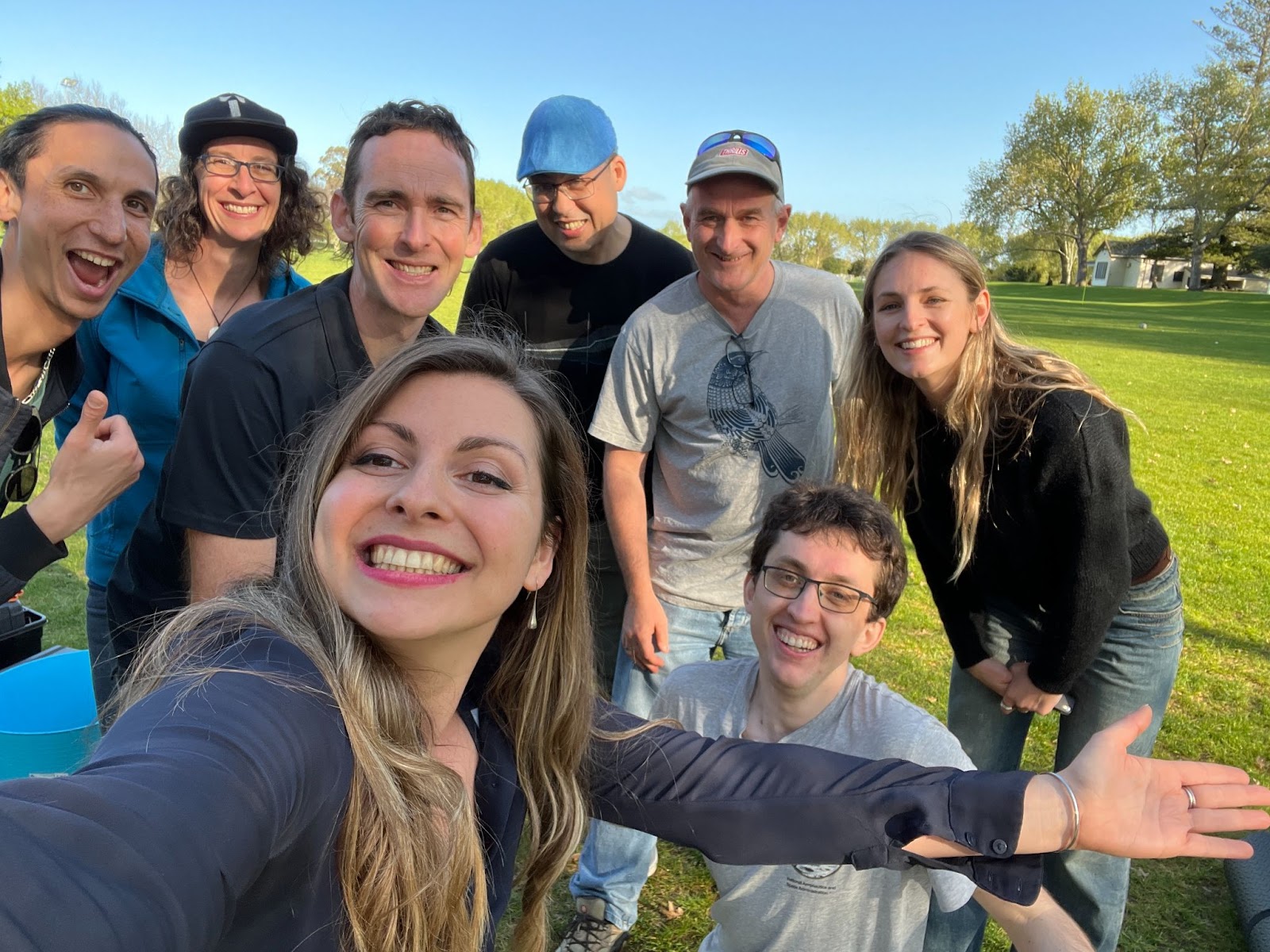
In 2019, Paul Winton had a problem. As a commercial due diligence specialist, he spent his days helping investors analyse businesses - applying first principles thinking to complex decisions. But this problem wasn't about a business deal.
"Because of a vacuum in climate solutions in Auckland," he'd later write on LinkedIn, "in spare time after the kids went to bed back in 2019, I applied the same approach to find how Auckland could decarbonise transport by 2030."
Paul sat down with the maths and physics. He looked at Auckland's emissions. He studied what other cities had done. And the answer kept coming back the same: the cheapest, fastest, most equitable, most resilient and least congested approach was to open streets to bikes and buses, to build more compactly, and to electrify what's left. Sounds simple enough, right?
Except Auckland's Regional Land Transport Plan was heading in the opposite direction. Billions toward state highways and emissions expected to increase 6% by 2031.
Paul Winton wasn't a transport activist. He was a dad doing spreadsheets after bedtime. And sometimes that's how movements start.
From Analysis to Action
By 2020, Paul's work, alongside legal analysis from Lawyers for Climate Action and networks from Bike Auckland, Generation Zero, and Greater Auckland, led to the formation of All Aboard Auckland, a coalition of people who saw that transport was the fastest, cheapest way to cut New Zealand's emissions.
Paul and Nicholas Lee eventually became founding trustees of what would eventually become All Aboard Transport Decarbonisation Trust. Their mission was to support community campaigns focused on opening streets for people and creating a decarbonised transport future.
The coalition brought together a diverse range of groups, including environmental advocates, urban planners, disability rights organisations, parents concerned about their children's futures, youth climate strikers, cycling advocates, and legal experts. Seventeen partner organisations in total, all united by a simple truth: transport is one of the easiest ways to achieve our climate goals because it makes our lives better.
In 2021, a separate legal entity was formed to take Auckland Transport and Auckland Council to court, arguing that the Regional Land Transport Plan's failure to provide for emissions reductions made it unlawful. The court found the threshold of unlawfulness wasn't quite reached. But the case (and the very real threat of legal action) forced the Council to do something different.
They created the Transport Emissions Reduction Pathway. The TERP.
The TERP: What Victory Actually Looks Like
In August 2022, Auckland Council unanimously adopted the Transport Emissions Reduction Pathway, a comprehensive, evidence-based plan to reduce Auckland's transport emissions by a whopping 64% by 2030.
All Aboard can take significant credit for making this happen. Not just through their legal action, but through detailed submissions and presentations to council committees, grounded in evidence-based analysis showing what was actually possible. They engaged a campaign manager for four months leading up to the 2022 local elections, specifically to ensure councillors would support the TERP.
The TERP isn't a list of projects, it's a framework for how to think differently about transport. Eleven transformation areas, from putting things closer to where people live to helping Aucklanders make sustainable transport choices.
Tim Adriaansen, transport strategist and All Aboard Director, explains: "The TERP is built from the experience of other cities and every action is not only based on evidence, but is realistic and achievable within a decade."
He points to cities like London, where low-traffic neighbourhoods are estimated to return up to 200:1 in economic benefits from healthier, more connected people, Paris’s transformation of its streets, Barcelona’s “superblocks", and Singapore’s comprehensive public transport system.
"By building our streets to supercharge walking and cycling, by creating safe infrastructure and low-traffic neighbourhoods, we allow our city's kids to have the independence to travel to and from school and play," Tim writes. "This means parents are not forced to drop off and pick up kids from schools, giving them time and flexibility every day."
While many people will still need cars, by giving a wider choice to communities, it will unlock the roads for easier use for everyone.
The Gap Between Policy and Reality
The TERP was adopted in 2022, but Tim notes, "Auckland's political leadership and transport agencies have largely failed to turn the pathway into action."
This is the frustrating reality of systems change. You can win the policy battle by getting the council to unanimously adopt a transformative pathway but still watch it get slowly eroded in implementation. Project by project. Decision by decision. Budget by budget.
All Aboard knows that a policy sitting on a shelf doesn’t reduce anyone’s emissions, so they continue to gather community voices and advocate for proper implementation.
What This Funding Makes Possible
When the curation team at The Climatics decided to fund All Aboard, they saw how their work fills a crucial piece of the transport decarbonisation puzzle. Sure, Auckland has the TERP and other cities have ambitious emissions reduction plans of their own. But what about rural communities? What about connecting the dots nationally? What about moving from planning through to getting things done?
With this grant, All Aboard will work to create that Aotearoa-wide vision, building support and understanding for how a transport transition can be more effective, equitable, and livable.
As they told us: "This grant is warmly appreciated recognition of the years of mahi that All Aboard, our partner organisations and community volunteers have been putting in for more than 5 years."
Five years of volunteer-powered organising, legal challenges, evidence-gathering, submission-writing, coalition-building. All to change how we think about getting from A to B. And they're not stopping, they want to scale their successful Auckland model nationally.
Why Transport Matters More Than You Think
Transport produces 17% of New Zealand's overall emissions and 39% of our CO2 emissions. In Auckland, it's over 40% of the city's total emissions.
Fixing transport makes life better for communities too.
When you build protected bike lanes and low-traffic neighbourhoods:
- Kids can safely bike to school (giving parents time and flexibility)
- Elderly and disabled people have safer streets to navigate
- Air quality improves
- Congestion decreases
- Communities become more connected
- Equity increases (low-income families get real transport options)
- Health indicators improve (from more people being more active)
As the TERP notes, implementing this transformation would cost less than 1% of GDP, while doing nothing costs 2.3% of GDP. Climate action is actually the low-cost, economically responsible choice.
This is why All Aboard keeps emphasising: "The decarbonisation of transport really is a win-win for all of us."
The Coalition Model
What makes All Aboard powerful isn't just their analysis or their legal strategy. It's how they bring people together.
Their coalition includes:
- Youth organisers (Generation Zero, School Strike 4 Climate)
- Legal experts (Lawyers for Climate Action)
- Cycling advocates (Bike Auckland, Big Street Bikers)
- Urbanists (Women in Urbanism, Students of Urban Planning & Architecture)
- Environmental organisations (Forest & Bird, Greenpeace Aotearoa)
- Community groups (Grey Lynn 2030, Movement, Citizens' Climate Lobby)
- Technical experts (Greater Auckland, 1point5 Project, Public Health and transport researchers and lots of behind-the-scenes experts)
They don't all agree on everything. But they agree on the goal: a transport system that's safe, efficient, accessible, and sustainable for everyone.
This diversity is their strength. People listen when a youth climate striker, a commercial analyst, a cycling advocate, and an environmental lawyer all say that we need to transform transport.
The Long Game
Paul Winton started doing transport math after his kids went to bed. Now, five years later, Auckland has a comprehensive plan to cut transport emissions by nearly two-thirds. All Aboard has helped one of New Zealand's largest cities completely rethink its approach to transport.
And they're just getting started on the national vision.
This is the nature of systems change: it can be slow and unglamorous, it can require endless patience and persistence. Showing up to council meetings. Writing detailed submissions. Analysing budgets. Building coalitions. Doing the math. Checking the implementation. Calling out backsliding. Celebrating wins. Regrouping after losses. Showing up again.
It's not as dramatic as a protest march. It's not as viral as a clever social media campaign. But it's how you can actually shape the options available to millions of people.
Why We're Funding Them
When we at The Climatics talk about "transforming the politics," this is what we mean. Not just individual actions or awareness campaigns, but the patient, strategic work of changing the frameworks that govern how we operate as a society.
All Aboard is:
- Translating complex analysis into accessible public messaging
- Building coalitions across diverse stakeholders
- Using legal pressure strategically to force better decisions
- Creating evidence-based visions that show what's possible
- Monitoring implementation to ensure policies don't just sit on shelves
- Scaling successful local efforts to national leve
They're volunteer-powered, community-driven, and punching way above their weight. Now they're ready to scale that success nationally and to show all of Aotearoa - not just Auckland - what a zero-emissions transport future looks like and how we get there. That's worth backing.
That's worth amplifying. That's worth funding.
| A dad doing math after bedtime. A coalition of seventeen organisations. A unanimous council vote. A comprehensive plan gathering dust. A movement that won't give up. This is how transport transformation happens - one street, one submission, one budget cycle at a time. |
All Aboard Transport Decarbonisation Trust is one of three organisations funded through The Climatics' 2025 pilot round. Their work aligns with three of our funding focus areas: “Building the Movement”, “Transforming the Politics” and “Elevating the Story”. Learn more about their work at allaboard.nz
More recent stories
June 9, 2026
Follow the Money
Most of us have KiwiSaver and think about it as the money (hopefully) accumulating in the background...

September 10, 2026
It's time for The Climatics' swan song.
Our setlist so far has featured two successful fundraising rounds, seven climate organisations funde...

March 5, 2026
Should we still be doing this?
Should we still be doing this? I've been rumbling with that question for the past week. I was deep i...
Join our Community
We’ll send stories and updates from The Climatics, plus ways to be part of climate action in Aotearoa.