
As the dust settles on our selection process we’re reflecting on how the decisions have come together. We’re feeling pretty chuffed with the whole thing, but that doesn’t mean that it was straightforward. As someone who’s spent a lot of time on the fundraising side of the (metaphorical) table, I thought it would be fun to pull back the curtain and share some of the backstage workings from the other side of the table. And as someone who read a lot of other people’s musing about philanthropy when I was new to this space, I wanted to pay it forward.
I warn you now - I’m about to get a bit nerdy about philanthropy. I promise there will be some palate cleansing photos of squirrels or something thrown into the mix.
From ‘proactive’ to ‘contestable’
For anyone who has been following our journey since the start, you might remember the massive (and let’s be honest - ugly) spreadsheet I wrote about: the mapping we did that surfaced over 100 organisations working on climate across Aotearoa. That was the starting point for finding our grantees last round. You can read about that here.
Given how brilliantly that turned out (we found our awesome first grantees that way, after all!), why wouldn’t we just stick with that?
That’s what’s called a ‘proactive’ approach. A donor identifies and approaches the organisations they are considering funding. Proactive approaches have lots of good things about them - on the whole it means organisations spend less time writing speculative applications. Done well, it also means that organisations aren’t being assessed on their ability to write good grant applications (which prioritises organisations who already have more resources); instead they’re assessed on the merits of their work. (That said, Fundsorter.com is brilliantly shaking the grant writing equation up and leveling that playing field!).
However, it risks funder blindspots. Yes, we did a massive mapping exercise, but we knew we hadn’t found everyone. It also prioritises organisations who have enough resources to maintain their websites or get out and about to networking events. It’s also less transparent - how does an organisation get onto the Climatics mythical mapping?
So we decided to open up. We made the shift to being a ‘contestable’ fund - ie. putting out a call for applications.

I promised you squirrels to break this up (arguably because I couldn’t think what type of image conveyed ‘philanthropy nerdery’...).
Creating an open door
We tried to marry the best of the proactive approach with the best of an open call approach. We had two things front of mind as we designed it:
- We know how time consuming and uncertain fundraising can be for organisations, taking them away from mission-focused activities. So we tried to make the lightest touch application possible - an ‘expression of interest’ - to honour applicants' time, while also making sure there was an open door for people to put their work forward.
- We wanted to take the guesswork out of figuring out whether someone’s work was a good fit or not. So we made clear criteria and wrote up our focus areas in as much detail as possible so organisations can easily identify if their work is a fit for our funding.
Did it work? On the whole, I’d say yes. With a few hiccups in the form that got spotted by an eagle-eyed friend (you know who you are…) who also made a last minute brilliant suggestion to add an optional “upload a document you already have that you think could help us understand your work better”.
We had 24 applications and every single one had alignment with our focus areas in one way or another. That doesn’t mean every organisation was a perfect fit, but even where there was lower alignment we could see links between what they were doing and what we’re looking to fund. And honestly? Even those were inspiring.

Speaking of inspiring, don’t you think this little fella looks inspiring and ready to act?
Decision making through collective sense-making
You might have heard us talk about our rockstar curation team? (Maybe once or twice… or maybe something like 73 times if you’ve been with us since the start - sorry, not sorry.) This is a group of five people bringing expertise across climate science, indigenous knowledge, business, community, government, philanthropy, and investment. They make the final call about the shape of our portfolio each round, not us (MJ & Pip).
Why do we do this? Climate change is a ‘wicked problem’: a problem that, due to its complexity and ever changing nature, is highly resistant to being ‘solved’. We designed our selection process to work with this rather than flatten it into false certainties. When it comes to complex systems, no one person or organisation has the pull picture. This means bringing together diverse expertise can strengthen decision making processes when it comes to climate change.
We (MJ & Pip) run the due diligence that informs the curation team’s deliberation. This round we shortlisted down to eight organisations, all of whom we’d reviewed and interviewed and re-reviewed, and sent off a 5-page profile on each one to the curation team.
Then came the fun part. (Who am I kidding? It's all fun!)
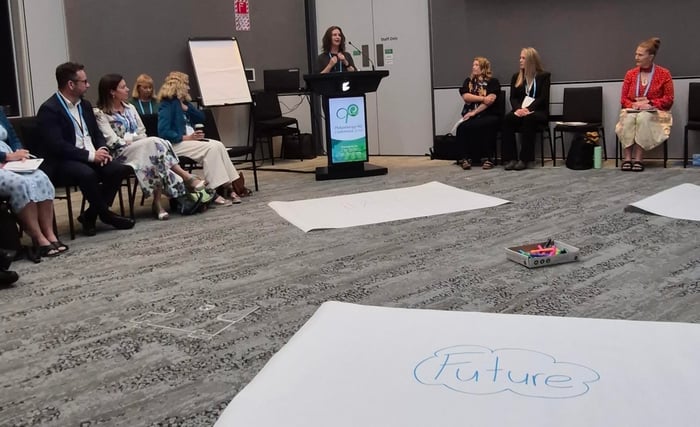
As I’ve written about before here, I get nerdy about collective decision-making processes. So our deliberation process is possibly a little unusual. The curation team reviews and ranks the organisations independently, then comes together for a conversation. (So far, so normal.) However, the conversation is designed for collective intelligence. We try to prime the group for deep listening and use a process tool called ‘levels of consensus’, a practice that resists reducing complex judgments to binary yes/no votes. This holds space for a group to reach shared understanding rather than smothering the nuance that can sit beneath the surface.
The end result: portfolio approach
No one organisation is going to ‘solve’ climate change. Nor is there a single approach or methodology that will get us across the line. So rather than making one big bet on one ‘best’ organisation, we spread our grants across several organisations with complementary approaches. We’re making a portfolio bet on a healthy ecosystem (in the metaphorical not the natural sense).
The idea is that the pieces work together. For example, (hypothetically speaking…) a well-timed, robust research project about a just transition over here, plus a national conversation about energy strategy over there, plus hundreds of conversations with whānau, hapū, and iwi about just transition and climate resilience across the country, plus everyday New Zealanders moving their investments away from polluting energy sources... when those things are happening simultaneously, that’s what can shift a system.
And while there is no obligation on our grantees to explicitly work together, we know that one organisation’s success amplifies the others’.
Tending to the wider ecosystem
We chose four organisations. You now know who they are, and we’re so excited we can finally tell you. But they’re not the only ones doing incredible work.
This space needs more funding. Out of the eleven interviews we did, ten brought up how stretched they were this year. Yes, they’re used to operating on lean budgets but they all said that somehow this year is even harder.
We know that lots of people want to support climate action. Our friends at Fundsorter even quantified what that looks like in the philanthropy space: 8.1% want have climate as a priority, yet only 1.02% of funds go there (check out the report here). Why? That’s a question lots of folks have been asking and there’s no single answer. We’re trying to close that gap between intention and action by making it easier to get philanthropic funding to places it can shift the dial - and we’re delighted that others are joining us on this journey already. If you’re part of that group who wants to fund climate but has been grappling with just how to do that, we’d love to talk.
And for a final squirrel to close us off… wait, you’re not a squirrel… but we’ll take you, you gorgeous quokka you.