I love the sound of the rain on the roof. Growing up in rural Australia, rain was, in a very real sense, a central focus of our lives. After each fall of rain, my father would diligently go out to the gauge and measure how much we’d had. He kept meticulous records, writing the amount in lead pencil on a special calendar on a special clipboard; each previous year on a separate piece of paper behind the current year. Flipping back through the pages, the shape of the numbers changed - his father’s handwriting - then changed again - his grandfather’s handwriting. 87 years of rainfall data.
When I was a kid, I remember my dad saying he thought in ten year cycles; for every decade he expected two droughts and one flood. The other years needed high enough yields to cover those off years. That was the maths of this land. By the time we sold the farm, that maths didn’t work. The patterns didn’t hold true anymore. There were more dry years, the rain was coming at different times.
If ever I’m asked why I work on climate change, one of the things I think about is how our lives are at the whim of the rains. I think of my father, and his father before him, and his father before him: how they watched the rains their entire lives, and how the once-dependable water is becoming increasingly unpredictable.
Why story
When asked why they care about climate change, people are likely to talk about the people, places and things they love. Not facts and figures; stories. Stories like the one above.
Story is an integral part of what makes us human. It’s how we make sense of the world. It’s how we build our feeling of belonging. It shapes what we think is possible, necessary, urgent. That then shapes what we do.
Therefore, if we can tell a different story, we can change what’s possible.
But how?
Awareness isn’t enough
The environmental movement has done a good job of increasing awareness and understanding of climate change. Don’t get me wrong, I’m not saying that everyone knows the full range of impacts or even the most impactful things to do to prevent warming, but the vast majority of people around the world now know what climate change is and have a passable grasp of its defining features.
We see climate change in the news. Government policies and target settings. States of emergency being called in the face of extreme weather. Ice sheets melting. The Strait of Hormuz dominating the headlines.
That’s all great. But it’s not enough to create change.
We need to do more than explain, we need to build support for solutions.
Making the benefits visible
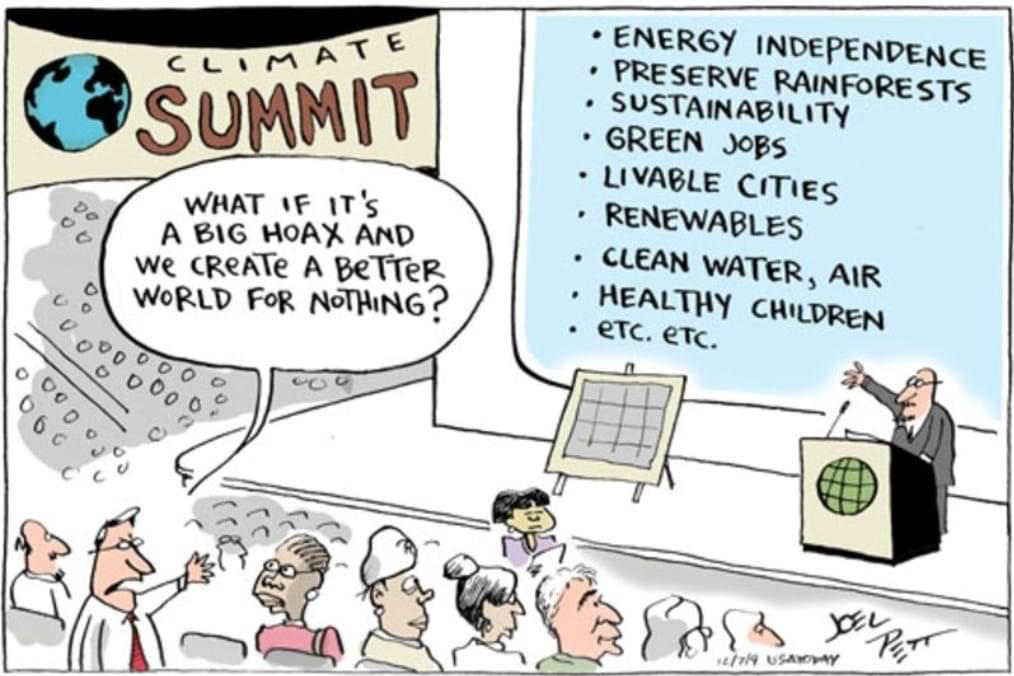
One thing that has been repeatedly shown to lift support for climate solutions - both in the general sense and in the specific - is helping people understand that transitioning will be good for all of us.
The solutions for climate change make us healthier. They make our communities stronger and bring us closer together. They create a better future for our children and the young people in our lives, protect our beautiful wild spaces. At a time where people are overwhelmed with violence thrust in their face via their newsfeed everyday, in the middle of a cost-of-living crisis, where they see politicians enacting policies that don’t work for ordinary people - support for climate change slips away. Making the benefits visible, visceral, personal, shifts that equation.
Looking at our grantees, I see this in action. I see All Aboard, making active transport accessible to more people - a climate solution that makes us healthier, reduces air pollution, is cheaper, and strengthens our communities. I see Mindful Money, catalysing a financial shift away from fossil fuels - a climate solution that also helps individuals make better investment decisions. I see 350 Aotearoa mobilising people to take action - a climate solution multiplier, that also weaves people into a community of committed individuals at a time when disconnection and loneliness are on the rise. I see Lawyers For Climate Action holding government and large corporations accountable for their climate responsibilities - a climate solution that also strengthens our democratic and legal institutions.
What if when we acted on climate change we were also bringing about a fairer, safer, happier world for all?
It’s all about trust, and trusted messengers
In an era where trust in institutional and expert information has become eroded, people are increasingly looking for information from more personal or community-based sources. As a friend put it to me the other day, farmers trust farmers, kids trust kids, no-one trusts politicians.
When you trust someone, you’re more likely to believe what they say. Simple.
So when we talk about “trusted messengers” in the context of climate communications, what we mean is figuring out who can mobilise which groups of people. Or, flipping that on its head, it means who is the audience that trusts you? Your workplace, your sports club, your group of friends? People increasingly say that they want to hear about issues like climate change not from scientists or news sources, but from friends, family, ‘people like me’ (including ‘people like me’ they only know online).
However, people who care most about the climate feel the least equipped to talk about it because they think they need to know all of the technical stuff. They don’t. You might not be an expert in climate science, but you are an expert in your own experience. So rather than fixating on whether you know your CO2 from your CH₄, ask are you the right person to be talking to this audience? Then, if yes, ask, what would move you? Because different things move different people. Chances are, no matter who you’re talking to, it’s the human story, not the relative warming potential of nitrous oxide that sparks our motivation.
One example of this is Science Moms (a US group, as you probably guessed from the spelling). It was started by Dr Katherine Hayhoe and Potential Energy (a group who call themselves a marketing firm for the earth). They crunched a huge amount of audience data and found suburban moms in swing states were crucial for getting support for climate policy. Their research also consistently showed that moderate mums are some of the most movable when it comes to climate. And yet, even though the majority of them were worried about the issue, it still wasn’t a priority for them. The trusted messenger group? Other mums. Specifically, mums who were working on climate science and could make it accessible and non-partisan. So was born Science Moms - to help mothers who are concerned about their children' s planet, but aren’t confident in their knowledge or how they can help. You can check out one of their videos here:
Helping connect the dots
Another storytelling tactic that builds support for climate solutions is helping people see climate change in the here and now. Not just as warmer temperatures and wilder storms, but as impacting the people, places and things they care about.
A quick look at recent headlines has rich pickings for connecting the dots.
The FIFA hydrations-cum-ad-breaks that have so many people annoyed? A climate change story about sport.
Last weekend’s tragic shark attack in Sydney? A climate change story about our safety in the ocean.
SpaceX’s IPO and trillions it netted for Elon Musk? A climate change story about… well… jeepers - where do I start? The space race, democracy, equality, pollution - pick your favourite angle!
All of this is climate change. Stories that join the dots between what’s happening in front of us and this big nebulous issue makes it feel real, make it feel relevant, make it feel personal.
A caveat to all of this
In systems change theory, this type of work is seen as operating at the deepest, mostly highly leveraged level of change: mindset shift, paradigm shift, shifting mental models, narrative. However, if we just work at the level of words without changing how people experience the world; if we just change the messaging but we don’t change people’s material conditions, then it’s empty. If we don’t engage with power - with the infrastructure that determines which stories get told, by whom, and which stories get heard - then we’re shifting our attention away from the work that’s actually needed. And maybe it’s even worse than if we said nothing at all.
This is a good reading for anyone who wants to see a deeper critique on narrative.
What we need now
There’s so much more I could have written about this - the sneaky power of humour, what a good reframe looks like, the role of fiction in shaping possible futures… I’ll save those for another time.
For now, there’s one thing I want to leave you with: get loud.
Narrative change is a collective process - no single campaign or organisation or message will create the change we’re working towards. One of our funding focus areas is “Elevate the Story” and all the organisations we fund do this in their own way. We try to too, with our own communications at The Climatics. But to create change, these types of stories need to hit a critical mass.
Share the hopeful stories, the funny stories. Talk to the people in your life where you are the trusted messenger and tell them why you care. Connect the dots between climate and what’s happening now, between the environment and the people, places and things we care about. Practice spotting all the myriad ways that climate action makes our lives better beyond just preventing warming.
Some resources on storytelling that I love: